

Which kit is right for me?
Choosing the right STOP THE BLEED® kit – and knowing where to place it – can make all the difference in a bleeding emergency. At StoptheBleed.com, we offer Rescue Essentials kits in Basic, Intermediate and Advanced tiers to match a range of risk levels and response needs. Whether you need a single-use kit or a full bleeding control station, our products are designed to help you act fast. Use risk assessments, foot traffic and accessibility guidelines to determine how many kits you need and where to place them. Consider adding them alongside AEDs or in high-risk work zones. A well-placed, well-stocked kit can make all the difference.

What kind of bleeding control kit do I need?
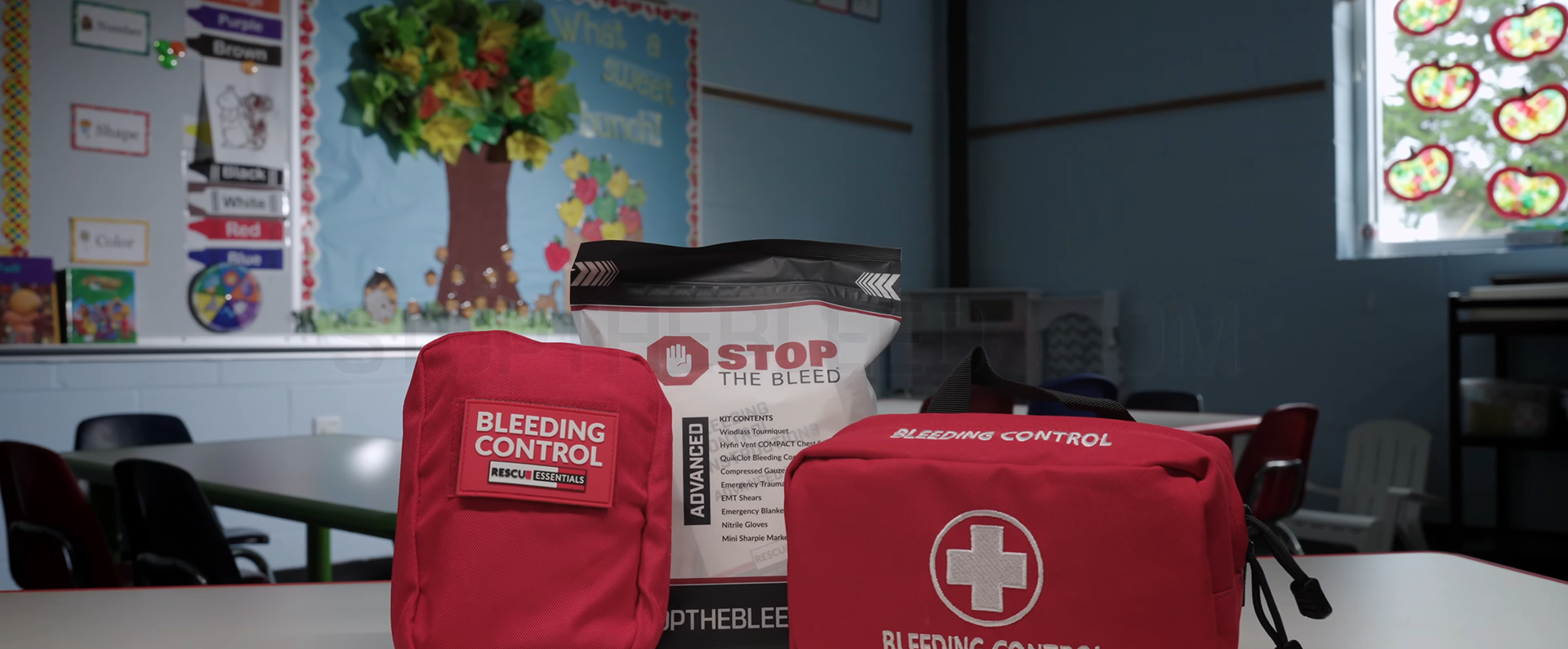
All Rescue Essentials STOP THE BLEED© kits are available in three tiers - basic, intermediate and advanced. These tiers meet various state laws on what should be in bleeding control kits. All kits contain tourniquets, but intermediate and advanced kits add chest seals and hypothermia blankets. Advanced kits also have hemostatic dressing, which is designed to help blood clot faster and stop bleeding more quickly.
Basic Kit
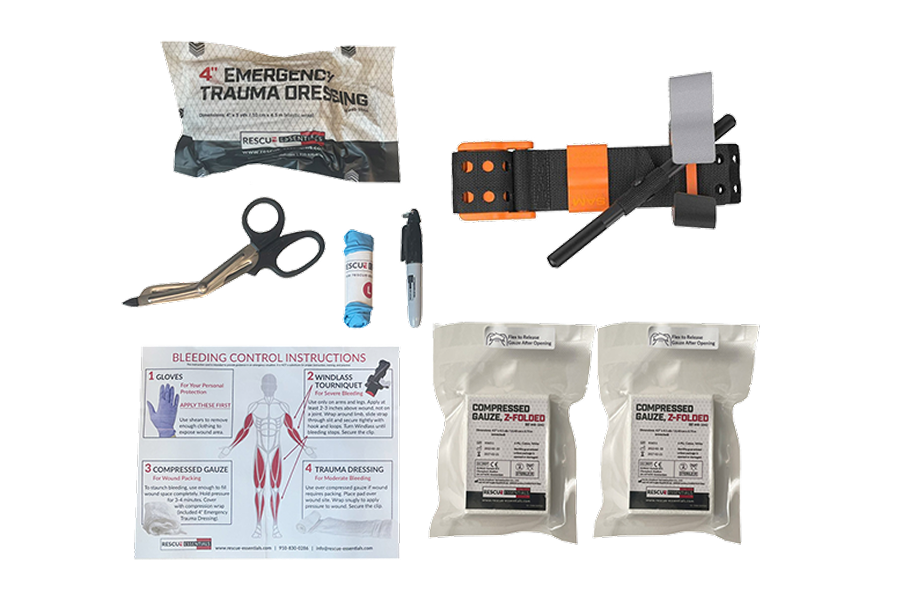
Contains a windlass tourniquet, two rolls of gauze and an emergency trauma dressing, along with gloves, shears, a marker and instructions. This kit includes the tools to address massive hemorrhage in arms, legs, shoulders and groin.
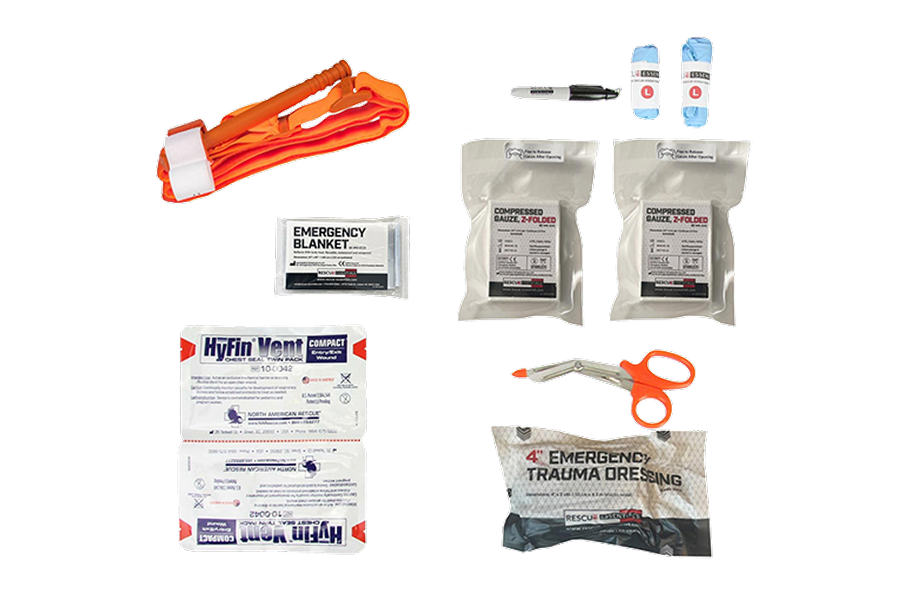
Intermediate Kit
Adds a second pair of gloves, chest seals and a survival blanket to the basic loadout of tourniquet, gauze, trauma dressing, gloves, shears, marker and instructions. This kit includes the tools to address massive hemorrhage in arms, legs, shoulders and groin, along with chest wounds and hypothermia.
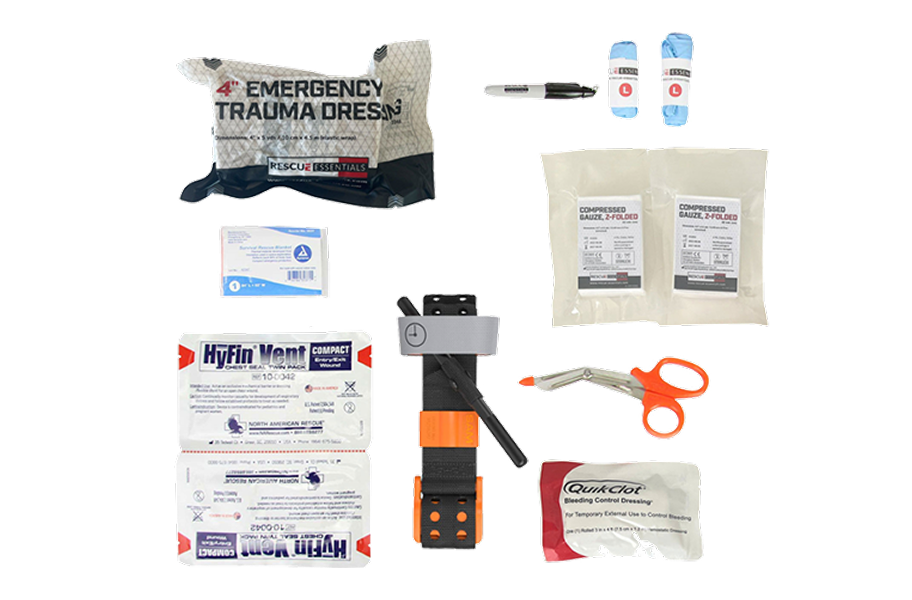
Advanced Kit
Adds a hemostatic dressing to the intermediate loadout of gloves (2 pair), chest seals, survival blanket, tourniquet, gauze, trauma dressing, gloves, shears, marker and instructions. This kit includes the tools to address massive hemorrhage in arms, legs, shoulders and groin, along with chest wounds and hypothermia. And it includes hemostatic bleeding control dressing that helps wounds clot more quickly.
FAQs
Please read our FAQ page to find out more.
How many bleeding control kits do I need?
Check to see if you have any state or local laws or guidelines you may need to follow. But based on legislation from multiple states and national best practices, here’s how to determine how many kits you need.
Consider Distance - Do not make responders travel more than a few minutes to access kits. Remember, victims can bleed out in 3-5 minutes.
High-Traffic Areas - Plan to treat up to 20 bleeding victims in large, high-traffic or occasionally crowded locations.
For Schools - Every campus should have at least one kit, with more added based on size and layout.
Risk-Based Planning - Use a risk and vulnerability assessment to scale kit quantity by foot traffic, injury risk, and facility size.
What other safety equipment do you have? How many fire extinguishers do you have? How many AEDs? Consider getting a matching number of bleeding control kits.
Where should kits be placed?
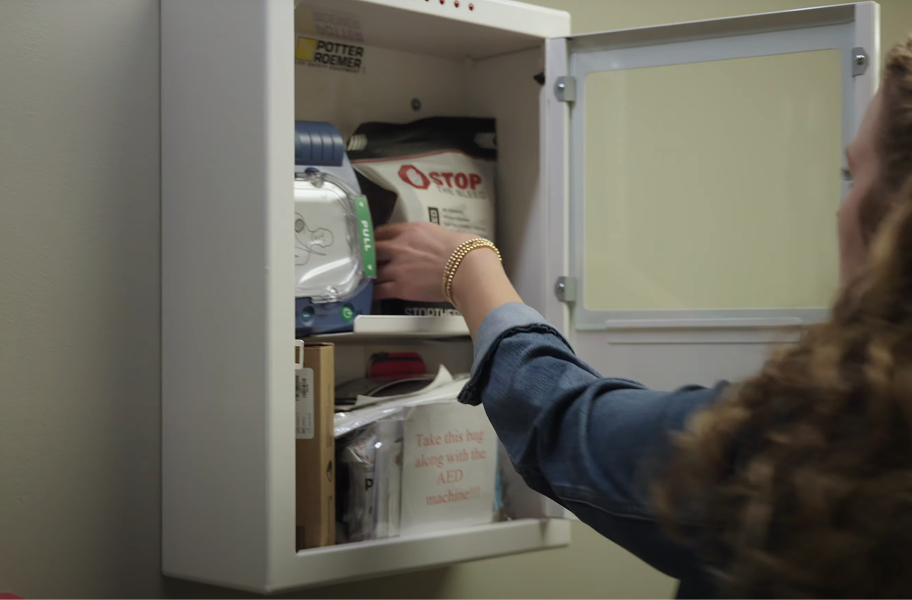
Next to AEDs or other first aid stations - Place kits alongside automated external defibrillators (AEDs) for consistency and accessibility. Many kits fit inside an AED cabinet alongside the AED. If you add a Stop the Bleed kit to an existing AED or first aid cabinet, be sure to add stickers or other signage letting responders know that a bleeding control kit is present.
In highly visible areas - Choose clearly marked, easy-to-reach spots. Add signage to guide rescuers quickly.
Strategic distribution - In larger buildings or campuses, disperse kits throughout – don’t rely on a single central location. Consider response times when choosing locations.
Include in safety plans - Document kit locations in your facility’s emergency response or safety plans.
How often do kits need to be maintained or inspected?
Annual Inspections - Check kits once a year for expired or damaged supplies.
Immediate Restocking - Replenish any used items right after an incident.
Can I get into legal trouble for trying to provide assistance in an emergency?
Most states provide Good Samaritan protections for individuals using STOP THE BLEED® kits in good faith and limit institutional liability for kit use or malfunction, when properly maintained.